
What is a Business Incubator?
A business incubator is a specialized organization that helps the growth of early-stage companies and emerging entrepreneurs. Business incubators typically offer a range of services, valuable mentorship from industry experts, facilitate networking opportunities with potential investors, and often offer funding options or connect startups with venture capitalists and angel investors. In addition to these resources, incubators may host workshops, training sessions, and seminars to enhance the skills and knowledge of entrepreneurs. Thereby turning ideas into a successful business.
Looking for an Office Space?
Finding an office space through myHQ is easy and efficient, with zero brokerage fees, the largest coverage across India, and quick turnaround time. Dedicated workspace experts assist every step of the way, ensuring a hassle-free search.
What are the Advantages of Business Incubators?
Business incubators are institutions proving to be highly beneficial for companies, especially if they are in their initial growth stage, where they savor early growth and success.
Below are the Advantages of Business Incubators:
1. Cost Efficiency:
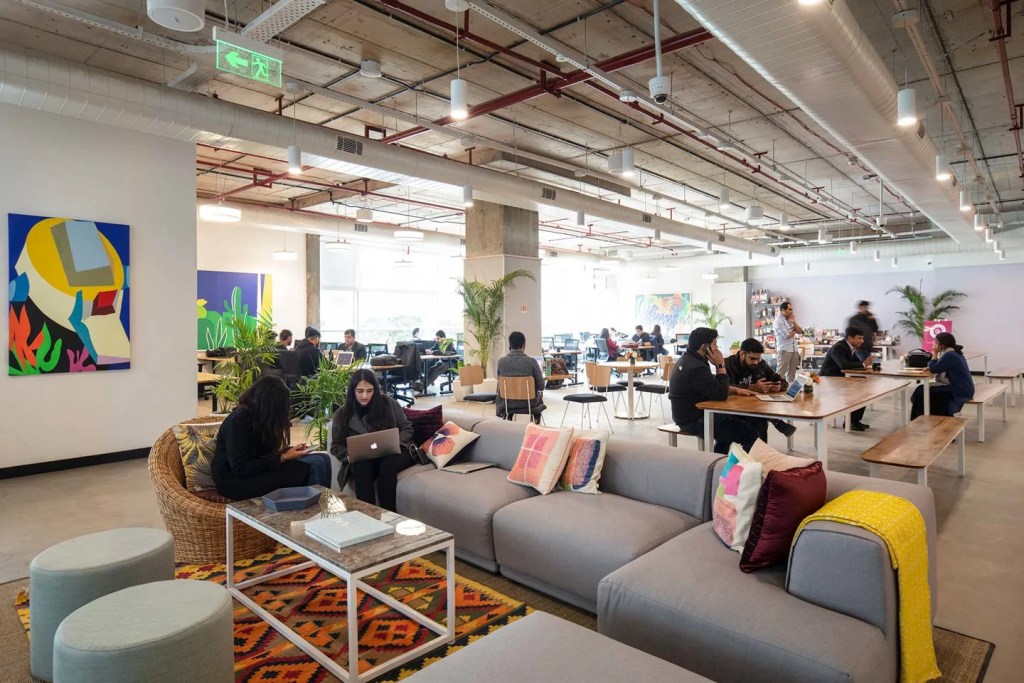
One of the primary benefits of business incubators is their ability to reduce overhead costs for startups. By offering shared office space and facilities at competitive rates, incubators allow entrepreneurs to focus their financial resources on critical areas such as product development and marketing.
2. Professional Mentorship
Business incubators are institutions formed to assist entrepreneurs in starting a successful business. They provide mentorship from product design to marketing strategies that turn ideas into successful businesses, along with various workshops and training programs that the entrepreneurs with the necessary knowledge.
3. Networking opportunities:
Business incubators are tied up with potential investors, industry leaders, thereby offering an opportunity for startups to grow their network, leading to a valuable relationship and promoting innovative solutions and partnerships.
4. Funding
Incubators offer startups initial growth funds as they are tied up with a network of investors, including venture capitalists and angel investors, increasing the chances of secure funding, They also organize pitch events where startups can present their ideas to investors.
5. Support Services
Services like legal and regulatory services, providing access to legal experts with regard to intellectual property protection and assistance in financial planning, accountancy, and administrative support, are provided by business incubators.
6. Increased Survival Rates
startups or businesses that choose incubators are expected to have higher survival rates compared to those who do not. They receive expert guidance and are supported with various facilities and required resources, leading to the success of a business.
How Does a Business Incubator Work?
Now that we are well aware of the benefits business incubators provide, let’s learn how they work!
1. Submit Application
A business incubator typically requires startups to fill out an application by submitting a detailed business plan, pitch deck, market potential, and team capabilities. The team reviews the necessary documents submitted and assesses the potential growth of the business, the business idea, and its fit with the incubator’s industry specialization.
2. Selection
Selection criteria vary by incubator but typically include the uniqueness of the business idea, the expertise and balance within the founding team, and the startup’s fit with the incubator’s resources and industry specialization. Incubators often prioritise startups in sectors they have the most experience or resources in, such as technology, healthcare, or fintech.
3. Onboarding
Once the companies get selected, they get introduced to the incubator’s facilities, resources, and staff, where they learn about the program structure, expectations, and available support services. Incubators often conduct orientation sessions where startups can meet other participants, understand the incubator’s culture, and begin forming connections with mentors and advisors.
4. Program Participation
Business incubators provide various facilities, including These include mentorship sessions, which can be one-on-one or in groups, and workshops that cover everything from product design to marketing strategies. Incubators may also provide access to specialized tools, software, or prototyping equipment crucial for product development.
5. Feedback
Incubators have regular check-ins with staff and mentors to discuss progress and the next initial steps, helping them stay on track in meeting their goals. They track the performance of the startups by using various metrics such as revenue growth, product development progress, etc.
6. Network
Since business incubators are tied up with the top industry leaders, investors, and potential partners, it provides an advantage for startups to build their network with working professionals from different businesses, leading to the establishment of a valuable relationship, fostering new work opportunities, and potential investors helping in the development of one’s business.
Managed Office Solutions by myHQ
✓ Fully furnished customized office
✓ Fully managed operations & housekeeping
✓ Expansive network of 300+ office spaces
✓ Zero brokerage fees
✓ Quick turnaround time
✓ Dedicated office spaces experts
Types of Business Incubators
Business incubators are of various types, each tailored to meet the specific needs of different industries and entrepreneurial goals. Here are some of the most common types of business incubators:
- Traditional business incubators: Traditional business incubators provide support across various industries, providing a wide range of services, including office space, administrative support, mentorship, etc. They are not specific to any industry and cater to fully meeting the potential of a business idea and turning it into a successful business.
- University affiliated incubators: applicable to startups that are research based or student founded businesses. These incubators are affiliated with universities and provide all the necessary resources and access to research facilities focussing on commercializing research and innovation from within the university.
- Corporate incubators: These are the types of incubators that are established by large corporations towards specific industries that align with their business interests. Here, startups receive mentorship, funding, and access to the corporation’s resources and facilities.
- Non profit incubators: Non profit incubators are applicable for startups mainly focussing on community development and social welfare, as these incubators focus on supporting ventures that align with their mission, often in areas like education, healthcare, etc.
- Virtual incubators: As the name only explains, virtual incubators are for startups that do not require a physical office space for their operational needs or who prefer remote support. They offer all the benefits offered by a traditional incubator.
- Accelerator incubator hybrids: These are the incubators that are applicable for startups looking for rapid growth and long term support, thereby combining the programs of both accelerators and incubators by offering mentorship and resources over a short period of time like accelerators while also providing long term support at the same time.
Incubators vs. Accelerators
Business incubators and accelerators are programs developed to support a startup by providing various resources and access to funds, fostering growth and success. Although they both support the development of startups, they tend to be a little different from each other.
Below are the main differences between a business incubator and a business accelerator.
| Aspect | Business Incubator | Business Accelerator |
| Purpose | They focus on developing a business at its initial growth stage, thereby providing assistance from the stage of ideation to the point where the startup is ready for further scaling. | They initially focus on the rapid scaling of businesses that are Ready for further scaling, thereby providing short term support and resources. |
| Program duration | Can vary widely in duration, often lasting from several months to a few years, focussing on long term development and growth. | Typically shorter, ranging from 3 to 6 months, the goal is to provide focused support and resources for a shorter period of time as these startups go through a fixed timeline. |
| Program structure | Very flexible, tailored to the specific needs of each startup. | Highly structured with deadlines and fixed timelines, ensuring an intensive process for all the startups. |
| Support services | They offer a broad range of support services, including office space, administrative support, resources, etc. | They provide intensive mentorship, resources, and guidance to help startups scale quickly. |
| Funding | Few incubators provide initial funding or help startups secure funding through loans or a potential investor. | They often provide seed funding or investments in exchange for equity. |
| Outcomes | The goal is to help the startups achieve stability and readiness for further investment or scaling. | The goal is to rapidly scale startups to promote growth and success. |
Examples of Business Incubator in India
1. T hub Hyderabad
One of the largest startup incubators based in Hyderabad supports startups across various sectors, including technology, healthcare, fintech, etc. It offers a high-quality infrastructure, mentorship from industry leaders, access to investors, and connects startups with global markets.
2. Startup village (Kochi)
Startup village Kochi was one of the first incubators in India, launched in Kochi, Kerala. It focuses on technology startups, particularly those in the telecom and internet sectors. It offers a coworking space, networking opportunities, mentorship, seed funding, etc.
3. NASSCOM 10,000 Startups ( Multiple Locations)
IT aims to support and scale 10,000 technology startups in India operating across different cities. It mainly focusses on technology-driven startups across multiple sectors, including IT, AI, and more. It provides coworking spaces, mentorship, funding, and networking opportunities.
4. IIM Ahmedabad’s Center for innovation and entrepreneurial development (CIIE)
CIIE is an incubator as well as an accelerator, founded by IIM Ahmedabad. It supports startups by providing mentoring, funding, and facilities, focussing on high-impact startups in sectors like ealthcare, education, and agriculture. It offers seed funding, mentoring from the faculty and industry experts, and access to potential investors.
5. Amity Innovation Incubator, Noida
This incubator is supported by Amity University, aiming to foster innovation and growth among the students as well as external startups. It mainly focusses on startups in diverse sectors. It offers a coworking office space, seed funding, mentoring, and a vast network of opportunities.
6. KIIT Technology business incubator (KIT-TBI) , Bhubaneshwar
One of the most prominent incubators in India is supported by KIIT University and recognised by the government of India. It supports startups that are technology-based, specifically in healthcare, biotechnology, agriculture, and IT. It offers seed funding, mentorship, technical support, network opportunities, and access to the research facilities.
Coworking Space
✓ Flexible lease
✓ Moderate Cost
✓ Customizable
✓ Tailored privacy
✓ Professionally managed
✓ Scalable options
Managed Office
✓ Highly flexible
✓ Lower cost
✓ Limited customization beyond desk
✓ Provider handles
✓ Provider managed
✓ Scalable options
Conclusion
Business incubators are an invaluable resource for startups looking to accelerate their growth and increase their chances of success. By offering a blend of mentorship, networking opportunities, funding access, and essential support services, incubators provide startups with the tools they need to turn innovative ideas into successful businesses. Whether you’re a budding entrepreneur or an early-stage company, joining a business incubator can be a transformative step toward achieving your business goals.
