
Choosing the right office layout is crucial for creating a productive and efficient workplace environment. A well-designed office layout not only impacts employee satisfaction and productivity but also supports the overall growth and success of your business.
In this article, we will explore various factors that should be considered when selecting a managed office layout, including different types of office space layouts, strategies for maximizing productivity and employee happiness, and key design considerations such as space utilization, lighting, storage options, privacy, employee comfort, safety measures, and special facilities.
Looking for an Office Space?
Finding an office space through myHQ is easy and efficient, with zero brokerage fees, the largest coverage across India, and quick turnaround time. Dedicated workspace experts assist every step of the way, ensuring a hassle-free search.
Types of Office Space Layouts
Before we get into the details of key factors to consider while choosing an office space layout, let’s understand what are the types of office space layouts.
Office layouts can vary widely depending on the needs of the organization and the nature of the work being performed. Office layouts can significantly impact workflow and collaboration. Here are some common types:
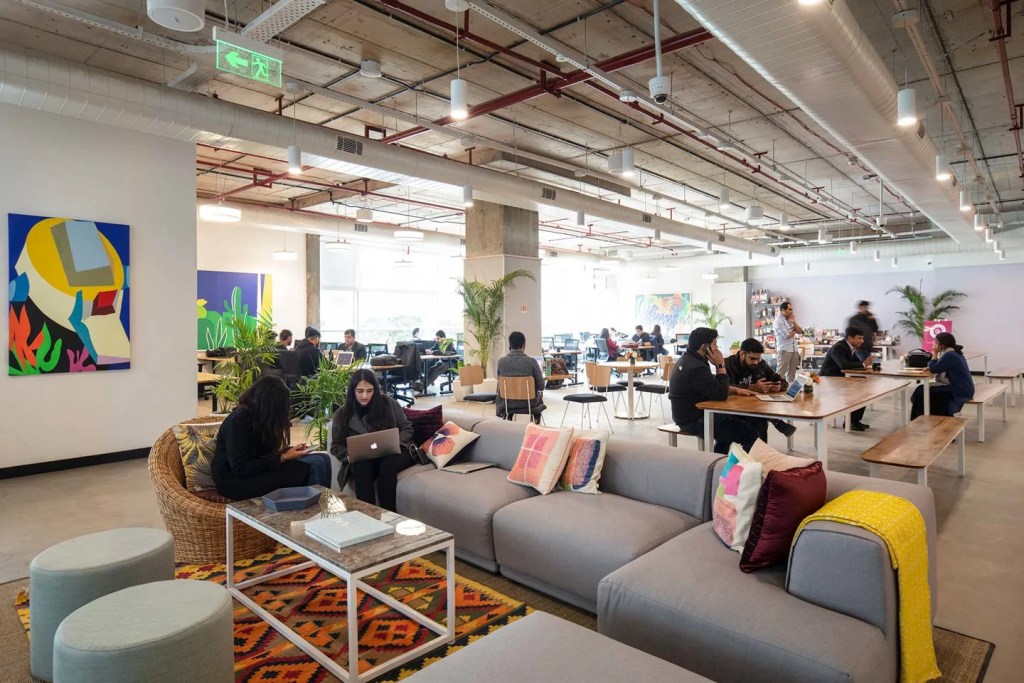
1. Open Plan Layout
This layout promotes collaboration and communication among employees by removing physical barriers such as walls and cubicles. It typically features shared workspaces and is popular among creative and tech industries.
Example: Tech startups often adopt open plan layouts to encourage team synergy and innovation.
2. Cubicle Layout
Also known as a modular office layout, this design uses partitioned workstations to provide employees with individual spaces while still allowing for some degree of openness and interaction.
Example: Call centers often utilize cubicle layouts to balance privacy with team cohesion.
3. Private Office Layout
Reserved for executives and senior management, private offices offer maximum privacy and confidentiality. They are often enclosed with solid walls and feature personalized amenities.
Example: Law firms commonly use private office layouts to maintain confidentiality.
4. Mixed Layout
A combination of different types of layouts tailored to specific departments or functions within the organization.
Example:
- A sales department might prefer an open plan layout for teamwork while a finance department may benefit from private offices for confidentiality.
- Advertising agencies might blend open plan areas for creative teams with private offices for account managers.
Managed Office Solutions by myHQ
✓ Fully furnished customized office
✓ Fully managed operations & housekeeping
✓ Expansive network of 300+ office spaces
✓ Zero brokerage fees
✓ Quick turnaround time
✓ Dedicated office spaces experts
11 Key Factors to Consider When Choosing Managed Office Layout
Choosing the right office layout is crucial for creating a productive and efficient workplace environment. It involves balancing various factors to meet the needs of employees and support organizational objectives. Here’s a comprehensive look at the essential considerations:
1. Type of Office Layout
The choice between open-plan and private layouts depends on your organizational culture and operational requirements. Open plans promote collaboration and transparency, while private offices provide confidentiality and focused work environments. A mixed layout may offer the best of both worlds, tailored to different departments or functions within the organization.
2. Office Size & Proximity
Efficient use of office space is crucial. Ensure there’s adequate room for equipment and furniture without overcrowding. Proximity between workspaces should facilitate collaboration while maintaining individual work zones. Avoid excessive empty space, as it can lead to disengagement among employees.
3. Cost Efficiency
Consider the cost implications of your office layout. For small businesses or startups, flexible workspace solutions like managed offices and coworking spaces can be more cost-effective than traditional leases. Plan for future growth with scalable options that accommodate expanding teams or changing needs.
4. Space and Navigation
A well-planned floor plan ensures efficient use of space and easy navigation. Design your office layout to support growth and adaptability, allowing for future expansions or modifications as the business evolves.
5. Privacy
Privacy in the workplace is essential for concentration and productivity. While open floor plans promote collaboration, they may not suit tasks requiring focus or confidentiality. Design your office layout to include private spaces or quiet zones where employees can work without interruptions.
6. Foolproof
A foolproof office layout is important for employee health and well-being. Ensure workstations are designed to minimize physical strain and discomfort. Adjustable desks and chairs accommodate different body types and preferences, promoting comfort and productivity.
7. Noise Management
Noise levels can significantly impact productivity. Depending on your business’s nature, consider noise reduction strategies such as sound-absorbing materials, designated quiet areas, or even acoustic treatments to enhance concentration and reduce distractions.
8. All-Around Lighting
Natural light boosts mood and productivity. Incorporate windows and skylights to maximize daylight exposure. Adjustable lighting options at workstations cater to individual preferences, enhancing comfort and visual appeal throughout the office.
9. Storage Options
Digital storage solutions streamline office organization and reduce clutter. Efficient storage systems optimize space utilization and improve overall office navigation, contributing to a clean and functional workspace.
10. Safety Measures
Prioritize safety in your office design. Ensure clear pathways to emergency exits and proper placement of fire safety equipment. Adhere to building codes and regulations to safeguard the well-being of employees and visitors.
11. Special Facilities
Include amenities that enhance employee comfort and convenience. This may include accessible restrooms, well-equipped break rooms with kitchenettes, and comfortable meeting spaces. Flexible workspace options like co-working areas or hot desks accommodate diverse working styles and changing business needs.
Coworking Space
✓ Flexible lease
✓ Moderate Cost
✓ Customizable
✓ Tailored privacy
✓ Professionally managed
✓ Scalable options
Managed Office
✓ Highly flexible
✓ Lower cost
✓ Limited customization beyond desk
✓ Provider handles
✓ Provider managed
✓ Scalable options
Important Tip – Always Include Your Employees in the Process
Your employees are integral to creating a workspace that promotes productivity and well-being. Involve them early in the office layout planning process to gather insights and preferences. Their input not only enhances decision-making but also fosters a sense of ownership and satisfaction with the final workspace design.
By soliciting feedback on privacy, ergonomics, noise management, office size, layout types, space utilization, lighting, storage, safety measures, and special facilities, you empower your team to contribute to a workspace that meets their needs and supports organizational success. Employee involvement ensures that the managed office layout not only meets functional requirements but also enhances overall workplace happiness and productivity.
How to Design a Managed Office Layout?
Listed below are some of the key elements to keep in mind while designing your Managed Office Layout:
- Use Broken Layout Plans: To balance privacy and collaboration, broken plan layouts that use partial barriers, screens, and different floor levels to create distinct zones within an open area can be used.
- Make Sustainable Offices: Eco-friendly procedures should be given priority to building sustainable offices, which lessen their negative effects on the environment. Utilizing greens, recycled materials, and energy-efficient equipment can be a positive step. These actions can reflect the responsible attitude of any company.
- Neurodiverse Work Environments: A company is said to be Neurodiversity friendly when it supports in the workplace a wide range of ideas for learning, thinking, and communicating. Neurodiverse workspaces offer surroundings that have supportive elements to improve inclusivity and productivity, catering to a wide range of cognitive demands. Employee participation is encouraged in sharing ideas in such an environment.
- Smart Offices: A smart workplace is one that integrates systems and software to create a seamless work environment, automates repetitive processes, and manages workflows to enable workers to work more productively. To maximize productivity, comfort, and connectedness in the workplace, smart offices use cutting-edge technology, including automation systems and Internet of Things devices.
Conclusion
Choosing the right managed office layout involves careful consideration of layout types, essential factors such as privacy and employee comfort, and critical design elements like lighting and decor. By prioritizing these aspects, businesses can create a workspace that enhances productivity, promotes collaboration, and supports employee well-being. Ultimately, a well-designed office layout contributes to a positive work environment and positions the organization for sustained success in a competitive market.
FAQs
-
What are the Important Elements of Managed Office for Employee Productivity?
Privacy: Balance between open spaces and private areas to cater to different work needs and tasks. Ensure employees have spaces where they can concentrate without interruptions.
Employee Comfort: Incorporate ergonomic furniture and design elements to support physical well-being and reduce fatigue.
Seating and Movement: Optimize desk arrangements and layout to facilitate easy movement and collaboration among team members.
Lighting: Maximize natural light and supplement with adjustable artificial lighting to create a vibrant and comfortable workspace.
Temperature: Maintain a comfortable temperature throughout the office to enhance employee comfort and focus.
Decor: Use colors and decor that promote a positive atmosphere and reflect the company’s culture. -
Why Choose a Managed office?
Managed offices typically feature private offices, meeting rooms, coworking spaces, and common areas, all fully furnished and maintenance services. This setup allows companies to focus on their core activities while enjoying the benefits of a well-managed, professional environment.
-
Why are Wellness Rooms important in office space layout?
Wellness rooms offer staff members a calm, serene area to rejuvenate and concentrate on their overall health, fostering both mental and physical well-being, which greatly improves employee productivity.
-
Why are dedicated meeting rooms in managed office space layout important?
Using open spaces, shared workstations, and meeting rooms, collaborative layouts promote collaboration and communication while creating an engaging and innovative work atmosphere. Soundproof meeting rooms are a plus for noise cancelation, improving focus and output by establishing a calmer, more comfortable work environment.
